

Not Your Mama’s Greens: The Vibrant, Quick-Cook Lumbee Collard Tradition

Updated: Jan 5
**Disclosure: This post may contain affiliate links. If you make a purchase through one of these links, I may earn a small commission, at no extra cost to you.**
When most people think of Southern collard greens, they imagine a big pot simmering for hours with a smoky ham hock. That is a wonderful, classic method! But in Robeson County, North Carolina, home of the Lumbee Tribe, there is a distinct and equally cherished way of cooking these greens that flips the traditional script.

This method results in brighter, less-stewed collards, and it is the foundation for one of the region’s most beloved culinary icons: The Collard Sandwich.
Why the Lumbee Method is Different
While many Southern cooks braise their collards for 3+ hours to create a rich pot likker (the seasoned broth), the traditional Lumbee preparation prioritizes the texture and slightly sweet-bitter profile of the greens themselves.
Instead of a long, water-based simmer, these collards are often sautéed or quickly braised in a flavorful fat—meaning less liquid and a much quicker cook time. The result? Greens that are tender, but still hold a lovely, vibrant bite.
The Core Ingredients
The Greens: Thoroughly washed and cut into thin strips.
The Fat/Meat: Fatback or mild ground pork sausage are common choices. This provides the salt and savory depth that seasons the greens.
The Seasoning: Simple salt, pepper, some people add a touch of sugar (to balance the greens’ natural bitterness) are key.

🌿 The Lumbee-Style Collard Recipe (Quick Sauté Method)
This is the method often used by renowned cooks in the Lumbee community for the famous Collard Sandwich.
Ingredients:
2 lbs. fresh collard greens, thoroughly washed, stemmed, and thinly sliced (chiffonade)
4 oz. fatback, diced, OR 1/2 lb. mild ground pork sausage
1 tsp. salt (or to taste)
1/2 tsp. black pepper
2 tsp. granulated sugar (optional)
A splash of water (only if needed)
Instructions:
Render the Fat: In a large cast-iron skillet, cook the fatback (or ground sausage) over medium heat until the fat has rendered out and the meat is browned. I have a separate blog post for cooking fatback. Remove any large pieces of crispy fatback/cracklings, reserving them for later, but leave the rendered fat in the pan.
Add Greens and Season: Add the collard greens to the pan a handful at a time, stirring as they wilt. Once all the greens are in the pan, add the salt and pepper. If you add sugar, add it in now.
Quick Braise: Reduce the heat to medium-low. If the pan looks dry, add just a splash of water (no more than 1/4 cup or enough to cover the bottom of the pan) to prevent burning. Cover the pan and let the collards wilt and tenderize for 10 to 15 minutes. Stir occasionally.
Serve Immediately: The goal is tender, brightly flavored greens—not mush. Once they reach your desired tenderness, they are ready!
The Ultimate Destination: The Collard Sandwich
In the Lumbee tradition, these quick-sautéed collards are the star of the show, but they are incomplete without their partner: The Fried Cornbread

The collard sandwich takes two thin, crispy discs of fried cornbread and piles the seasoned greens (often along with a piece of crispy fatback) between them. It’s the perfect marriage of crunchy, salty, savory, and sweet-bitter—a truly genius way to eat greens on the go, no fork required!
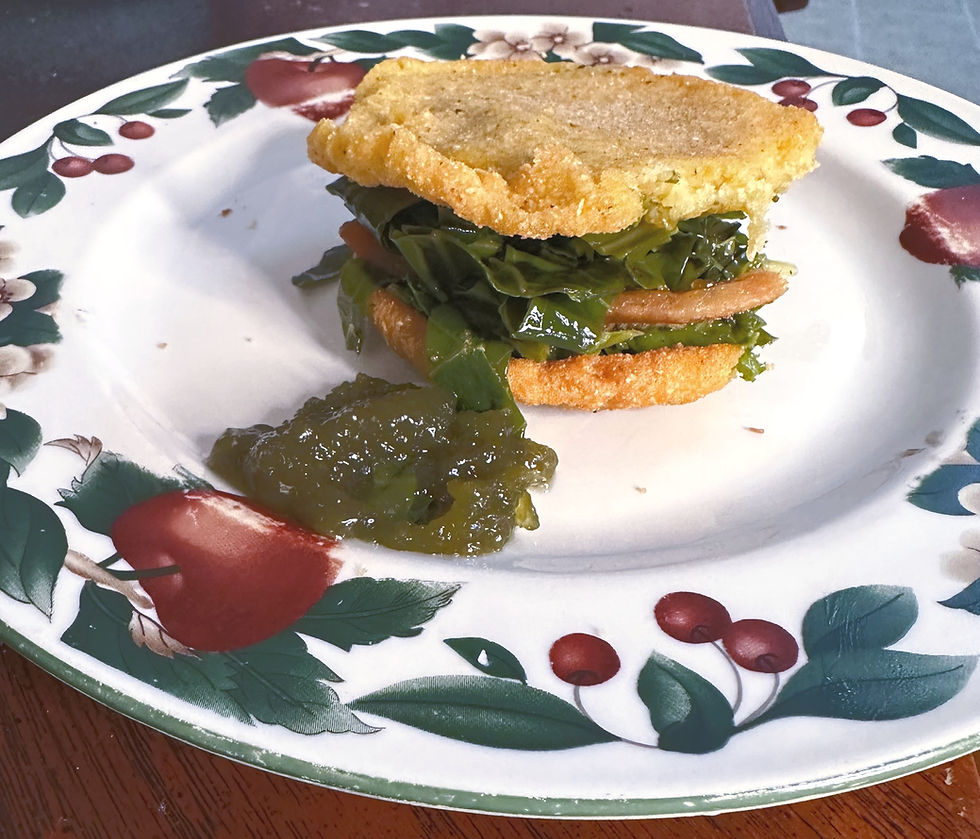
If you're looking for a fresh, less-labor-intensive way to cook collards, try the Lumbee method. It’s a delicious tradition worth bringing to your own table!
Have you ever tried a Collard Sandwich? Tell us about your favorite Southern side dish in the comments!
1
Meat Grease
You can use your preferred type of meat to cook your collards in. Pork is the typical meat of choice. This includes fatback, pork chop, bacon, or side meat. When adding oil to your collards, less is more. You can always add more oil if you need to,
2
Cooking the Collards
Add enough water to cover the bottom of your skillet. Cover the collards and add water as necessary, You'll need to stir them occasionally to ensure they don't burn.
Notes


1
Wash your collards. You will need to wash them several times to ensure there is no dirt or uninvited dinner guests.
2
Stack the collard leafs and roll them up. Using a knife, cut the collards in strips according to your preferred thickness.
3
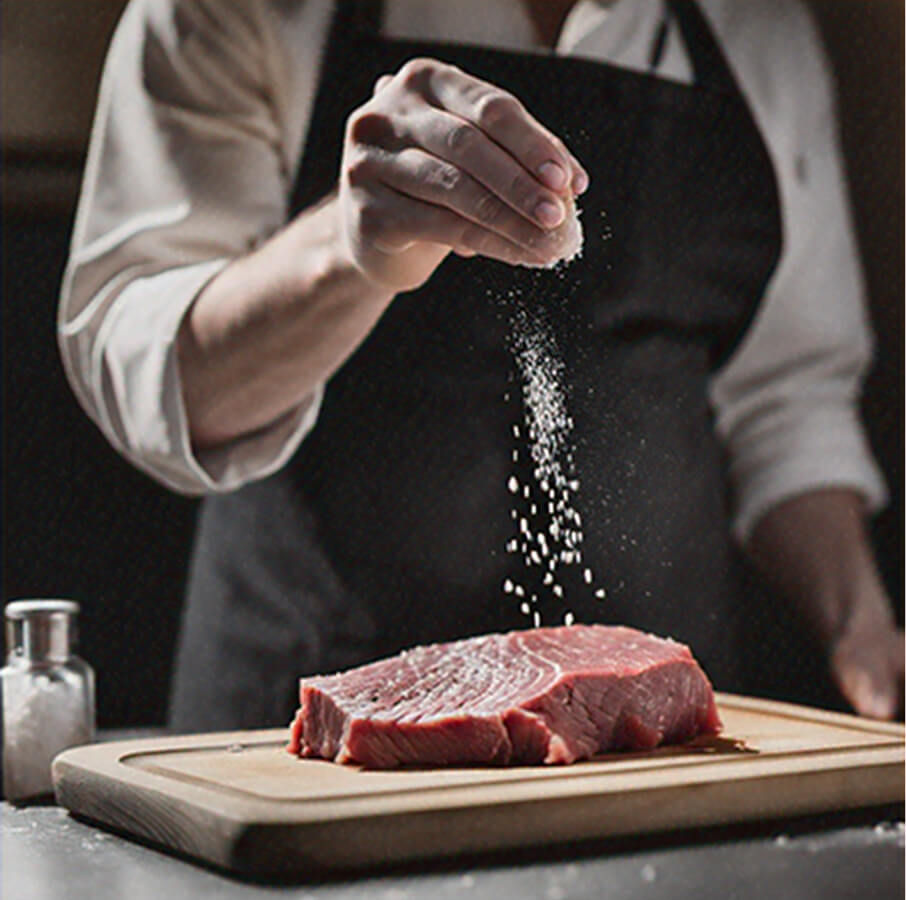
Cook your meat of choice and reserve the oil from cooking.
4
Add enough water to cover the bottom of your skillet. Fill the skillet with cut collards. Pour in some of the reserved oil.
5
Cover the collards with a lid and cook until they are almost tender. Add more water as needed. Once the collards are almost tender, remove the lid. Allow the water to evaporate from the collards.
6
Season your collards and let them continue to cook until tender.
7
Cook the fried cornbread for your collard sandwich according to the Fried Cornbread recipe! Let it cool and assemble your sandwich! You can add pepper jelly on it or to the side.
Instructions
Collards
Fatback
Cooking Oil
Collard Cooking

Not Your Mama's Collards
Anastasia Oxendine

Collards have traditionally been considered to take hours to cook. This method takes much less time and are still delicious. They taste just as good as if they had been cooking all day. The Lumbee style of cooking collards uses meat grease or fat to cook the collards. This method sautes the greens until they are tender. The collards have a much richer flavor profile than traditional boiled collards.
Servings :
4 Servings
Calories:
813 Calories / Serve
Prep Time
30 min
Cooking Time
45 min
Rest Time
10 min
Total Time
1 hour 30 min

Comments