

The Collard Sandwich: A True Taste of Lumbee Heritage and Resilience

On the homestead, we learn to treasure every part of the harvest. We celebrate the deep satisfaction of turning simple ingredients into nourishing meals. But some dishes do more than just feed the body; they tell the story of where you come from.
For me, few things are as culturally meaningful as the Collard Sandwich—a true staple of my Lumbee heritage from North Carolina.
If you’ve never had one, you might be picturing a cold-cut sandwich with a leafy garnish. Think again. This is a hearty, historic meal where the bread and the filling are both deeply rooted in our Southern and Native American foodways. It’s a culinary masterpiece built on just three simple ingredients.
What Makes a Lumbee Collard Sandwich?
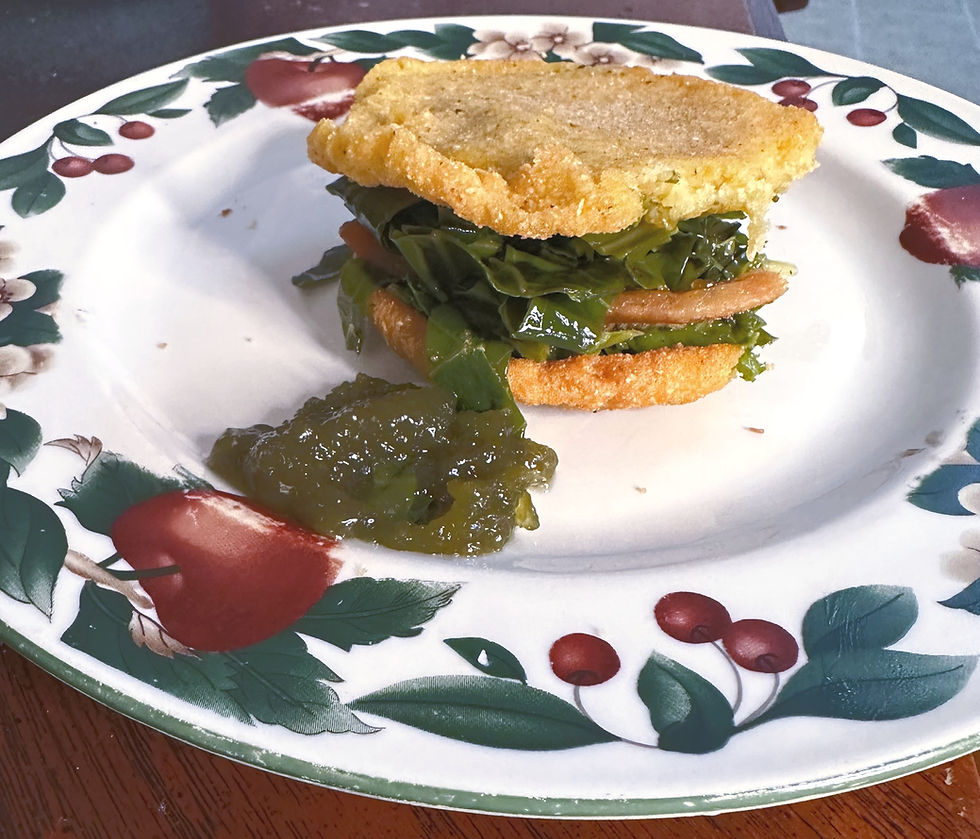
The beauty of this dish is its simplicity and its powerful connection to the land and our ancestors' ingenuity. It’s an edible piece of history:
The "Bread": Fried Cornbread Forget white slices or brioche The collard sandwich starts with two thin, crispy patties of fried cornbread.
Looking for the perfect side for these collards? Download the Fried Cornbread guide here!
The Heritage: Corn is one of the oldest and most vital indigenous crops in America. The cornbread provides the structure, the unique texture, and the ancient Native American foundation for the entire meal. It’s the essential vehicle for the greens.

The Filling: Slow-Cooked Collard Greens These aren't just steamed greens. These collards are slow-simmered, tender, and deeply seasoned—often with savory fatback (pork fat) or a smoked ham hock.
The Homestead Connection: Greens are a key part of the Lumbee diet, reflecting our agricultural history and the ability to grow food year-round, even in the cool Southern winters. The seasoning adds a richness that speaks to the resourcefulness of the traditional Southern kitchen.

The Binding: Fatback and Flavor The fatback not only seasons the collards but also acts as the "glue" that holds the sandwich together, offering a rich, salty counterpoint to the subtle bitterness of the greens. Some families will add a touch of vinegar or a side of chow-chow (a pickled relish) for a tangy kick.

A Dish Born of Necessity and Resilience
The collard sandwich didn't become a staple by accident; it represents the resilience of the Lumbee people.
It’s the ultimate example of transforming humble, homegrown ingredients—the corn that grew easily and the greens that thrived—into a dense, nourishing, and portable meal. Historically, it was a practical dish that could be easily wrapped up and carried to the fields or to the factory for lunch.
Today, you'll find signs for Collard Sandwiches lining the roads around Robeson County, North Carolina, especially during Lumbee Homecoming in the summer. It's more than a meal; it’s a ceremonial dish that brings kin together and grounds us in our community identity.
Bringing This Heritage to Your Table
As a homesteading mama whose family grows their own greens, I feel a profound connection to this dish. It is a reminder that the most delicious and meaningful food doesn't require complex ingredients—just respect for the process and a connection to the culture that created it.
If you’re ready to taste a piece of American indigenous history, I encourage you to make your own. The perfect Lumbee Collard Sandwich is all about that contrast: the crispy, nutty texture of the fried cornbread against the silky, seasoned warmth of the collards.
Do you have a heritage dish that uses your garden bounty? Share your stories in the comments—I'd love to hear how you honor your ancestors through your cooking!
Get your Collard Sandwich Guide here!
1
Meat Grease
You can use your preferred type of meat to cook your collards in. Pork is the typical meat of choice. This includes fatback, pork chop, bacon, or side meat. When adding oil to your collards, less is more. You can always add more oil if you need to,
2
Cooking the Collards
Add enough water to cover the bottom of your skillet. Cover the collards and add water as necessary, You'll need to stir them occasionally to ensure they don't burn.
Notes


1
Wash your collards. You will need to wash them several times to ensure there is no dirt or uninvited dinner guests.
2
Stack the collard leafs and roll them up. Using a knife, cut the collards in strips according to your preferred thickness.
3
Cook your meat of choice and reserve the oil from cooking.
4
Add enough water to cover the bottom of your skillet. Fill the skillet with cut collards. Pour in some of the reserved oil.
5
Cover the collards with a lid and cook until they are almost tender. Add more water as needed. Once the collards are almost tender, remove the lid. Allow the water to evaporate from the collards.
6
Season your collards and let them continue to cook until tender.
7
Cook the fried cornbread for your collard sandwich according to the Fried Cornbread recipe! Let it cool and assemble your sandwich! You can add pepper jelly on it or to the side.
Instructions
Collards
Fatback
Cooking Oil
Collard Cooking

Not Your Mama's Collards
Anastasia Oxendine

Collards have traditionally been considered to take hours to cook. This method takes much less time and are still delicious. They taste just as good as if they had been cooking all day. The Lumbee style of cooking collards uses meat grease or fat to cook the collards. This method sautes the greens until they are tender. The collards have a much richer flavor profile than traditional boiled collards.
Servings :
4 Servings
Calories:
813 Calories / Serve
Prep Time
30 min
Cooking Time
45 min
Rest Time
10 min
Total Time
1 hour 30 min

Comments