

Liquid Gold: Why You Should Be Making Your Own Chicken Broth

There is a specific kind of satisfaction that comes from looking at a row of golden jars filled with homemade chicken broth. Whether that broth started with a chicken you raised in your own backyard or a whole bird you picked up at the grocery store, you are looking at "liquid gold"—a nutrient-dense, flavorful base that beats the store-bought cartons every single time.
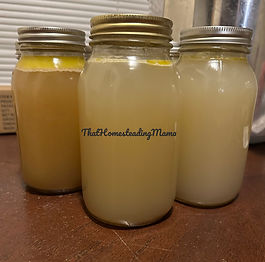
A Quick Note: This post contains affiliate links for the kitchen tools I use and love (like my favorite pressure canner). If you make a purchase through one of these links, I may earn a small commission at no extra cost to you. This helps support the blog and our backyard flock! Thank you for your support.
Lately, I’ve been processing chickens from our backyard flock, but I want to be clear: you don't need a farm to do this.
The Economy of the Whole Chicken
In a world of pre-packaged boneless skinless breasts, we’ve lost the art of the whole bird. Buying a whole chicken—whether from a local farmer or your neighborhood grocer—is significantly more economical.
From one bird, you can:
Roast it for a Sunday dinner.
Shred the leftovers for tacos, salads, or chicken salad.
Simmer the carcass (or the whole raw bird) to produce 4 to 6 quarts of rich, gelatinous broth.
By the time you're done, that single chicken has provided the foundation for three or four different meals and enough broth to last a month.
Homemade Chicken Broth Recipe
This method works for a fresh backyard chicken OR a store-bought whole chicken.
Ingredients:
1 whole chicken (approx. 4–5 lbs) or the carcass of a roasted chicken.
2 large onions, quartered (leave the skins on for a deeper gold color!).
3 large carrots roughly chopped or 1 pint of baby carrots
4 cloves of garlic, smashed or garlic powder
salt
pepper
sage
1 tablespoon apple cider vinegar (optional, this helps pull the minerals from the bones).
Water (enough to cover the bird by 2 inches).

Instructions:
Place the bird (and any neck/giblets) in a large stockpot. Add your vegetables, herbs, and vinegar.
Cover with water.
Bring to a gentle simmer over medium-high heat. Once it reaches a simmer, immediately turn the heat down to low.
Skim the "scum." In the first 30 minutes, you might see some gray foam rise to the top. Skim this off with a spoon and discard it for a clearer broth.
Simmer Low and Slow. Let it cook for at least 4 hours (up to 12 if using a slow cooker). If you used a whole raw chicken, you can remove the bird after 1.5 hours, take the meat off the bones for meals, and return the bones to the pot to keep simmering.
Strain. Pour the broth through a fine-mesh sieve into a large bowl. I like to strain mine through a colander and then a fine mesh strainer. Discard the solids.
How to Store Your Broth
Once your broth has cooled and you’ve skimmed the fat off the top (save that fat—it’s called schmaltz and it’s great for frying potatoes!), it’s time to store it.
1. Freezing (The Easiest Way)
You can freeze broth in glass jars or plastic containers.
Crucial Tip: Leave at least 2 inches of headspace at the top of the jar. Liquid expands as it freezes, and if the jar is too full, the glass will crack. And be sure to use freezer safe jars!
Broth stays fresh in the freezer for about 6 months.
2. Pressure Canning (The Shelf-Stable Way)
If you want to keep your broth in the pantry to save freezer space, you must use a pressure canner. Because chicken is a low-acid food, water bath canning is not safe. I will make a separate post on canning chicken broth.
Process: Pour hot broth into sterilized pint or quart jars, leaving 1 inch of headspace.
Timing: Process pints for 20 minutes and quarts for 25 minutes at the pressure recommended for your altitude (usually 10–11 lbs).
This gives you a shelf-stable product that is ready to use the second you pop the lid!

Making your own broth is a bridge back to a more sustainable, intentional way of eating. It honors the animal, saves you money, and makes your kitchen smell like home.
1
Celery
You can add celery to the broth if you desire.
2
Apple Cider Vinegar
A splash of apple cider vinegar will help get the minerals out of the bones. It is optional, but recommended.
Notes


1
Place the bird (and any neck/giblets) in a large stockpot. Add your vegetables, herbs, and vinegar.
2
Cover with water.
3
Bring to a gentle simmer over medium-high heat. Once it reaches a simmer, immediately turn the heat down to low.
4
Skim the "scum." In the first 30 minutes, you might see some gray foam rise to the top. Skim this off with a spoon and discard it for a clearer broth.
5
Simmer Low and Slow. Let it cook for at least 4 hours (up to 12 if using a slow cooker). If you used a whole raw chicken, you can remove the bird after 1.5 hours, take the meat off the bones for meals, and return the bones to the pot to keep simmering.
6
Strain. Pour the broth through a fine-mesh sieve into a large bowl. I like to strain mine through a colander and then a fine mesh strainer. Discard the solids.
Instructions
Chicken Carcass
Water
3-4 cloves of garlic
1-2 onions
teaspoon of sage
salt (1 tablespoon)
pepper (to taste)
2-3 cups baby carrots
Chicken Broth

Homemade Chicken Borth
Anastasia Oxendine

There is a specific kind of satisfaction that comes from looking at a row of golden jars filled with homemade chicken broth. Whether that broth started with a chicken you raised in your own backyard or a whole bird you picked up at the grocery store, you are looking at "liquid gold"—a nutrient-dense, flavorful base that beats the store-bought cartons every single time.
Servings :
4 Servings
Calories:
813 Calories / Serve
Prep Time
10 min
Cooking Time
8-24 hours
Rest Time
15 mins
Total Time
1-2 days


Comments